Unknown's avatar

The Pitfalls of the Quest for Perfect Nutrition

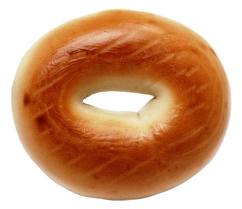
 bagelI once overheard a personal trainer at my gym say to another trainer “I was so bad today, I had a white bagel!”   The other trainer gasped in horror as I cringed to myself and debated whether or not it was worth telling the trainer how silly she sounded.  I don’t like when people refer to themselves as bad because of something they ate. That’s classic eating disorder talk and it’s sad to think that some people genuinely feel so guilty about something they ate.  Sometimes I think things like the trainer said are said as an exaggeration or for effect, but it’s still not a good habit.  Eating a less than healthy food does not make one a bad person! Lying, cheating, stealing…those things make you a bad person, but not your nutrition choices.
The problem I see with striving for perfect nutrition is that it doesn’t exist.  Think about it: two of the most popular ways of eating out there currently, vegetarianism and Paleo, are just about as opposite as you can get.  So how do you even begin to define what “perfect” would look like?  There is no consensus on what the best diet is, even amongst nutrition professionals.  Another problem with trying to attain perfect nutrition is that there is almost always a next step that could be taken.  Eating lean meats isn’t good enough; you have to marinate them to help reduce development of carcinogenic compounds during cooking.  Oh and make sure it’s grass fed and free range. And local.  Maybe it starts with decreasing sweets, then it’s decreasing refined grains, then it’s all grains, then it’s an eating disorder.  Okay, now I’m exaggerating but you know what I mean.  Where do you draw the line?  To me, this means that trying to reach nutrition perfection will result in inevitable failure, and you’ll end up feeling bad about yourself and possibly set yourself up for disordered eating.
So what do you do if health is important to you but you don’t want to feel bad about your nutrition choices?
  • Eliminate food rules.  If you have rules, you’re more likely to want to break them and then feel guilty about it afterwards.
  • Practice mindful eating. Pay attention to what you are eating and enjoy it.
  • Find balance.  A white bagel isn’t going to ruin your health as long as it’s not the main staple.  Set more realistic goals, like choosing whole grains more often than not, that way you don’t have to shame yourself for the occasional appearance of a white bread product.
  • Practice moderation.  Allow yourself less nutrient dense foods, such as dessert, on occasion. Totally denying yourself of it will just make you want it more.
  • Don’t stress about the occasional indulgence. That’s normal and that’s part of what makes life enjoyable.  One brownie will not change the course of your life (okay maybe if it has an engagement ring in it or something!)
  • Reward with food in moderation.  But also try to find other forms of reward, like getting a massage or buying yourself that new gadget you’ve been wanting.
  • Never punish with food (yourself or your kids).  Even taking away dessert can backfire. I once worked with a patient whose parents locked up all the candy in the house when she was a kid. Years later when she got a car she started driving to the store daily to buy her own candy to binge on.
  • Focus on the positive. Instead of thinking about what you “shouldn’t” eat, focus on getting plenty of nutritious foods.  If you’re getting enough of them you just might find you don’t even want the less nutrient dense stuff.
  • Get to the bottom of the bad feeling.  Chances are it’s not really about the food, so if you are feeling really guilty about your food or eating habits or your body enlist the help of a dietitian or even a therapist to explore your relationship with food and your body.
Unknown's avatar

I Swear I’m Not Slacking (Eat Your Vegetables)

 Okay, so I haven’t written a blog in what feels like forever, but it’s not for lack of want. I have ideas in my head, and some even half written down.  However, I am currently working on a 3 hour presentation that I will be giving March 2nd (yes you read correctly: 3 HOURS!) on the dietitian’s role in the treatment of eating disorders and not only is that taking up a lot of my time, but it’s also sucking my will to do anything other than stare at the wall with the little free time I have.  Okay, maybe it’s not that bad, but it’s my excuse for lack of blogging. So in the meantime I’m going to copy and paste a blog I wrote a long time ago on vegetables.  If there is one thing the plethora of diets out there can agree on, it’s that vegetables are good for you and you should probably be eating more off them.  In fact, if you ever come across a diet that says not to eat vegetables you should probably run the other way!

Vegetables are an integral part of a healthy diet, regardless of your health and fitness goals. Not only are they packed with vitamins, minerals, fiber, and antioxidants, but they are also low in calories.  The general recommendation is 5-9 servings of fruits and veggies a day, and most of those should be vegetables not fruit, but most people find it easier to get in fruits than vegetables.  It’s not an easy target to hit (a serving is 1/2 cup cooked or 1 cup raw veggies). Most people don’t even come close, and sadly white potatoes are the most frequently eaten vegetable in the U.S.  Which I think barely counts! I find the best way to get in enough vegetables is to add them to foods I already eat. It’s much easier to throw some extra veggies on top of your sandwich then to try to incorporate plain veggies into your diet as snacks or sides (but those are good ideas too), especially if you’re not too keen on the taste. Below are some tips on sneaking extra veggies into your diet.

1. Put bell peppers, onion, spinach, broccoli, or mushrooms in your morning omelet.
2. Add bell peppers and onions to hash browns and serve them with a little ketchup or salsa on the side.
3. Make a homemade veggie pizza with tomatoes, bell peppers, onions, mushrooms, and even broccoli if you’re feeling adventurous.
4. Try a veggie quesadilla on a whole wheat tortilla with part skim mozzarella and oven roasted zucchini, bell peppers, and onion.
5. Spice up spaghetti sauce with mushrooms, peppers, onions, zucchini, diced carrots, or sauteed spinach.
6. Load up your sandwiches with veggies-not just lettuce and tomato but spinach, cucumbers, alfalfa sprouts, bell peppers, and onions.
7. Place a few slices of tomato and spinach on a whole wheat grilled cheese sandwich.
8. Add layers of spinach or eggplant to lasagna.
9. Blend cooked cauliflower or broccoli into mashed potatoes.
10. Add your own extra mixed veggies to store bought soup.
11. Blend a handful of kale or spinach into a fruit smoothie.

If you’re not a huge fan of vegetables, try roasting them in olive oil. I swear it makes any vegetable taste better, plus you’ll get in some healthy fats!

Unknown's avatar

Jumpin’ on the (green smoothie) Bandwagon

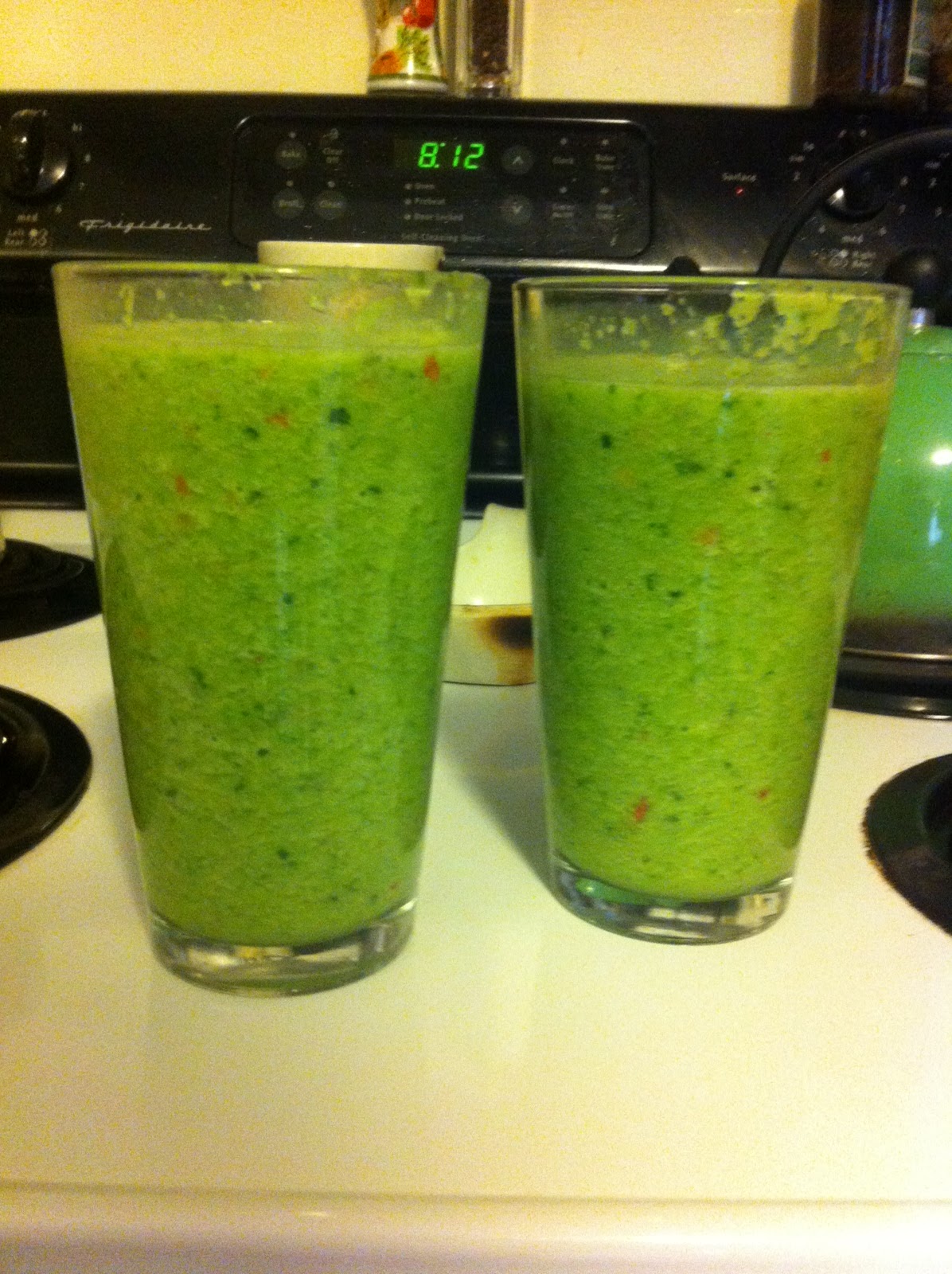
 I’ve never been one to go for whatever the fad du jour is.  If it’s trendy, fashionable, or in vogue (en vogue? I don’t even know!) I’m not usually drawn to it, whether that be fashion, food, or life.  I’m not sure if this stems from not wanting to conform, not paying attention, or not caring about what’s “in”, but it’s just the reality of how I am. This is particularly true when it comes to food trends.  Raw foods? No thanks. Paleo? Nah. Gluten-free? Not for me!  I guess I just don’t want to do something because it’s popular.  If I actually like something and believe in it, well that’s another thing.  Case in point: green smoothies.  At first I was skeptical.  Liquid spinach?!  But in reality they’re a great way to get in more veggies, which is a food group most people don’t get enough of.  They are refreshing on a warm day, pretty tasty, and frankly, they are kind of fun. Okay so I’ve only made one so far but I like the concept and I plan on experimenting with them more and hopefully posting more recipes.  Yes, ladies and gentleman, I have joined the green smoothie trend.

Here’s what I did for my first one:

8 oz coconut milk
1-2 handfuls spinach
1/2 cucumber, cubed and preferably frozen
1 green apple, cubed

1/4 avocado

Unknown's avatar

When it Comes to Food, Are There Just Two Kinds of People?

A colleague of mine was recently confronted with the following question by a person she met on a plane.

“Which type of person are you? An “eat to live” or a “live to eat” person?”
This person held the theory that all people fall into one of two categories: those who only eat because they have to in order to survive, but who get no joy out of eating, and those who get great joy out of eating and would do it whether or not their survival depended on it.  Ah, how simplified!  I guess I get where this person is coming from, but I disagree that all people can be shoved into one category or the other based solely on the fact that I believe I can’t wholly be placed on either side. It’s a good thing I didn’t bump into this person because my answer would probably be way more info than they wanted! Case in point: as a sports dietitian I’m very interested in how to properly fuel the body, particularly during exercise.  I guess that would fall into the “eat to live” category since it’s all about science and performance and not enjoyment.  However, I really like food (well good food). My Denver Restaurant Week experience at ChoLon Bistro was amazing! There is a foodie side of me that loves to explore new restaurants and try the occasional indulgent meal.  That would be my “live to eat” side.  Depending on the day or specific situation I might be more on one side than the other, but overall I think I’m pretty much in the middle.  Both sides are there, as equally balanced as can be.  I guess you could say I’m a “live to eat to live” person!
 I’m also not sure it’s healthy to only consider yourself one or the other. Where’s the balance? It’s okay to enjoy eating, but it’s also okay to think about health and fueling your body with productive foods.  Amazing indulgent meals lose their appeal if they’re eaten every night after all.  But eating based off numbers all the time is a rigid way to live.  The human relationship with food is complex.  We use it in all sorts of social situations, from work lunches to weddings.  We use to celebrate, to comfort ourselves, and to connect with others.
So let’s not divide ourselves into two categories.  It’s okay if you fall more on one side than the other, but we are all people, and we all need to eat, and deserve to enjoy it!
Bon appétit!
Unknown's avatar

Tart Cherries and Exercise Recovery

Hardcore and recreational athletes alike are always on the lookout for the latest edge in sports nutrition, whether that be for training, fueling, or recovery.  Lately there has been some buzz about tart cherries and their implication in recovery from strenuous exercise.  Not to be confused with the regular dark red cherries you’re probably used to, tart cherries are bright red and, well, tart tasting.

So what’s the big deal? Well first of all they are a great source of antioxidants.  Although exercise is great for you, it does create free radicals and antioxidants can help fight back which is why it’s important to have a diet full of antioxidants (i.e. fruits and vegetables, not from supplements).  The main antioxidant in tart cherries, anthocyanin, is what gives it the bright red color.
Tart cherries are also anti-inflammatory, which may explain why they have been associated with a decrease in heart disease risk.  Decreasing inflammation is also helpful for athletes, as strenuous exercise can cause inflammation.  Tart cherries are also thought to help reduce the pain from inflammation, and therefore can be helpful for conditions such as arthritis and gout.
Lastly, tart cherries help reduce muscle damage after exercise and help athletes recover more quickly.  This was demonstrated in a study of marathoners which found that runners who drank cherry juice 5 days before, the day of and 2 days after running a marathon experienced a faster recovery of strength, increased total antioxidant capacity and reduced inflammation.  Another study gave college-aged men participating in a weight lifting program 12 ounces of cherry juice or a placebo twice day for 8 days and then measured strength loss after performing 2 sets of 20 repetitions of a specific exercise.  This study found that strength loss after exercise was only 4 percent with the juice compared to 22 percent with the placebo beverage, and pain significantly decreased after cherry juice consumption.
 Image
So how do you incorporate tart cherries into your diet?  The studies I found had athletes drinking the juice several days before and after workouts, so one drink right after a workout may not be enough to gain any noticeable benefit, but it certainly won’t hurt.  The studies used an average of 8-12 oz of juice (100% real tart cherry juice) at a time.  You could drink the juice straight up if you prefer, or follow one of these “recipes” below.
  •  Blend 8-12 oz 100% tart cherry juice with frozen mixed berries (or freeze the cherries and mix with milk) for a post workout smoothie; add protein powder for a protein boost.
  •  Toss dried cherries in cooked quinoa.  Add sliced almonds and sautéed spinach to make it awesome.
  • Toss a handful of dried cherries into your post exercise breakfast oatmeal.
  •  Make your own trail mix with tart cherries, almonds, and dark chocolate pieces (or whatever else sounds good).
For more info check out:
Unknown's avatar

Another Good Reason to Eat Almonds and Stop Counting Calories

National Nutrition Month (March) has come and gone and I have failed to even mention it! Whoops.  Well, Happy Belated National Nutrition Month!

One of the first lessons taught in Nutrition 101 is the caloric value of the macronutrients:
Protein= 4 calories/gram
Carbohydrate= 4 calories/gram
Fat= 9 calories/gram
Calories are basically units of energy.  Technically, a “calorie” (or more accurately “kilocalorie”) is the amount of energy it takes to raise 1 gram of water by 1 degree Celsius.  Now you’ve probably lost all interest, but hear me out.  These numbers are based on the Atwater system, which was developed using a bomb calorimeter.  If I recall correctly, that’s a machine you put food in and basically blow it up, then measure the heat it took to do so (or something like that, but much more complicated).  Anyway, these numbers are the basis of the calorie totals that we find on nutrition labels today.  Seems straight forward enough, right?  Well maybe not.  Recent research is questioning the accuracy of the Atwater system, particularly as it pertains to some fats such as nuts.  The theory is that the chemical composition of nuts does not give an accurate picture of the metabolizable energy (i.e. how many calories you will actually absorb) due to reduced digestibility.  One study found that Atwater overestimates the measured energy value(calorie) of almonds by 32%!  This means that when you are eating a supposedly 185 calorie serving of nuts, your body may only be getting (and therefore utilizing) 140 calories.  As if you needed another reason to eat nuts!  Even if other studies don’t validate this one, nuts are still a great source of unsaturated fats and packed with vitamins and minerals!  I eat them almost every day.
almonds
But the real take home message of this study is that maybe not all foods can be thrown into a simple 4/4/9 category when it comes to calories.  Which brings up the question of what foods besides almonds might not be what they seem calorie-wise?  And the further question of So What?!  I don’t recommend counting calories anyway.  It’s no way to live and also not the best way to ensure you are eating healthfully (you can meet your calorie needs through jelly beans and soda after all).  For many people calorie counting can become a compulsive and unhealthy activity.  To add further confusion, opposite of what this study has found are studies examining restaurant foods which have found that entrees tend to contain more calories than the restaurant menus state.  So you may be getting less calories in some instances, and more in others.  You can’t win when counting calories, so don’t do it.
So what can you do if you are concerned about your weight and/or health?
  •   Watch your portion sizes.
  • Eat from a wide variety of foods, including lots of fruits and vegetables, lean proteins, healthy fats, and whole grains.
  • Hydrate with non caloric beverages (water is the best!)
  • Incorporate exercise on a regular basis.
Yup, that’s it.  Keep It Simple, Smarty!
Unknown's avatar

Why Do We Do It?

(Note: this is less of an informative blog and more of a me pondering my fitness choices and ultimately life itself blog!)

I may have done something a bit crazy.  I signed up for the Pikes Peak Ascent.  Just thinking about it gives me a mixture of excitement and fear that is hard to sit with.  It felt like a logical decision at the time.  After all, I love hiking 14ers and I like running half marathons…might as well combine them!  But as my lungs burned and my legs dragged while I ran up Mt Falcon this past weekend, a run that is a measly 1/5 the distance of Pikes and not even close to the elevation, I had to ask myself: Why are you doing this?
And in the moment I couldn’t answer.  I’m not a total stranger to endurance activities that others might find insane.  I somehow made it through the 120 miles and 10,000 ft of elevation gain in the Triple Bypass.  That was hard, but doable.  Of course I barely rode my bike at all the entire next year I was so exhausted afterwards!  The Pikes Peak Ascent, however, is billed as “America’s Ultimate Challenge” which is even more intimidating.  So why am I willing to subject myself to such potential heinousness?
When it comes to athletic endeavors that challenge both the mind and body, why do we do it?
We’ve all heard of the natural endorphins that kick in after running or other exercises, and maybe that is a factor. There are also studies about the beneficial effects of nature on your psyche.  So clearly there is a mental benefit to such athletic endeavors.  But I don’t believe that’s the prime answer.  Is it the sense of accomplishment?  Winning a battle with ourselves (isn’t that technically also losing a battle with ourselves?!) Does it give us a sense of purpose? Is there one right answer?
I think that if you were to ask a lot of athletes why they do what they do they would not be able to give a beautifully articulated answer that made sense to the general population.  Clearly, I can’t either.  Maybe I’ll be able to say when I reach the top of Pikes on August 17, I mean assuming I can even talk at that point!  What I do know is the feeling.  And the feeling is probably a big part of the reason.   Unfortunately I cannot put into words the feeling I got when I reached the summit of my first 14er (as an adult, I don’t count my summit of Grays Peak at age 7), but I remember exactly how it felt.  It was a mixture of excitement, triumph, beauty, and something else. I literally almost cried.  There isn’t a word that accurately describes the experience.  There isn’t one perfect word to respond to the “why”.
I’ll leave you with a quote from someone I’m a big fan of, mountaineer Ed Viesturs, on the topic of “why”.  In his book “No Shortcuts to the Top” he addressed the question of why he chooses to risk life and limb to climb these treacherous and potentially deadly peaks (a question that I would imagine a lot of mountaineers get).  I think his answer pretty much sums it up what I’m trying to say.  Ed’s answer was “If you have to ask, you will never know”.
Unknown's avatar

A Move

I’m moving to a new neighborhood!  Virtual neighborhood that is, from my Google blog to this one.  I plan on transferring all of my old blogs over here, but that could take some time, so please bare with me in the meantime.  I also apologize that it will likely take me quite some time to figure out how to spruce this thing up, add pictures and cool features etc.  But my hope is that this will ultimately be a good move, and one that will help Mountain Girl Nutrition and Fitness grow.

To new journeys!


Jen